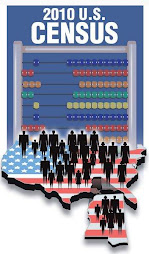
Seventy percent of DeSoto County households returned their federal census forms as of Friday's deadline to return the forms by mail, and local officials said Monday they were pleased with the response.
At 70 percent, DeSoto County outpaced the state as a whole, which had a return rate of 64 percent. The local figure was also slightly above the national return rate of 69 percent.
The figures were the most current available as of Monday afternoon.
"We're about 50,000 more (in population) than we were last census but still had about the same response rate," Matt Hanks, DeSoto County Geographic Information Systems director, said. "I think that's pretty impressive."
Hanks said the percentages may continue to creep up slightly even though the deadline has passed as late-arriving forms continue to be counted through May 3.
Friday was set as the deadline nationally to return forms received by mail. Those residences that didn't return forms by the deadline will be counted manually by census workers.
"I think one reason we did so well was the strong participation by officials in each city, encouraging residents to return forms," Hanks said. "I understand Mayor Alday was going door to door asking people to send in their forms,"
Hanks was referring to Walls Mayor Gene Alday, who said it's important for DeSoto County's smallest incorporated municipality to get an accurate count to secure certain grants.
Sixty-one percent returned forms in Walls, the lowest return rate among DeSoto County's five cities.
"Within the next 10 years, we're going to need federal assistance -- more fire, more police," Alday said. "We need to be eligible to apply for those grants in order to operate."
With only about 460 residents as of the last census count, Walls said he believes his community now stands at about 1,800 population. And that number could swell significantly if on-hold developments begin moving forward as the economy improves.
DeSoto County as a whole had an estimated population of 158,719 as of last July 1, representing a population gain of 51,520 since the 2000 census.
-- Ron Maxey: (901) 333-2019
Final count
Friday was the deadline to submit federal census forms by mail. DeSoto County's response rate as of Monday was 70 percent, compared to 69 percent nationally. The Mississippi return rate was 64 percent.
The return rates in DeSoto County's five incorporated municipalities, which figure into the countywide total along with returns from unincorporated portions of the county, were:
Olive Branch: 73 percent
Hernando: 72 percent
Southaven: 67 percent
Horn Lake: 63 percent
Walls: 61 percent
Showing posts with label Census 2010. Show all posts
Showing posts with label Census 2010. Show all posts
Tuesday, April 20, 2010


Monday, April 19, 2010
Census stakes high for Raymond
Raymond eyeing Census count...
For Raymond Mayor Isla Tullos, the difference between 2,000 and 1,999 is much greater than one.
It's the difference between a well- or ill-equipped fire department, between catching speeders and letting them go, between encouraging lawbreakers and keeping them at bay.
Between feeling safe and feeling vulnerable.
"That is the difference between being called a town or a city," Tullos said.
Once again, the U.S. census will determine the difference. And once again, Tullos hopes census takers give Raymond its due.
In 2000, they did not - at first. And the error underlines the potential impact of an inaccurate count for communities across the country as the mail-out/mail-back phase of the 2010 census ends Monday.
"Quite frankly, I'm worried about this happening here again," said Tullos, Raymond's mayor since 1997.
"For one thing, I never received a census form. I had to go to the library to get one."
A settlement of soon-to-be-determined size, Raymond rests in the middle of Hinds County, boasting a quaint town square chaperoned by a lofty water tower and perfumed by an outbreak of snowball viburnum's enormous white blooms.
At lunchtime one day last week, Tullos filled out a census form at a table inside the Country Food Shack on Clinton Street, across the way from her residence in the Old Probate building - another Raymond landmark.
"That's it," she said, finishing the form. "Very easy."
A few blocks away sits the main campus of Hinds Community College, whose students were key in restoring Raymond to city-hood after the last census. They will be key this time, too, Tullos said.
Ten years ago, Raymond's original population count amounted to a few hundred shy of the 2,000 needed to meet the "city" benchmark.
The city was demoted to a town.
That meant police felt handcuffed when it came to stopping speeders, Police Chief Jason Crotwell said.
"Towns aren't allowed to protect their citizens with radar. It's hard to catch or prove someone is speeding without it."
Radar-equipped police patrols also stir up a happy side effect, Tullos said.
Friday, April 16, 2010
Wicker: Strong Census response will benefit MS communities
Wicker Urges Census Participation
A Strong Response will Benefit Mississippi Communities
The 2010 U.S. Census is well underway, and officials are beginning to tally the census forms that many citizens mailed back by the April 16 deadline. I am troubled by the rate of participation being reported out of Mississippi. A Census Bureau survey indicated that only 62 percent of Mississippi households statewide have responded so far, compared to a 67 percent rate by the deadline in 2000.
Some people have speculated that a healthy and growing skepticism about big government may result in a lower participation rate in this year’s census. However, I would strongly suggest that ignoring the census is not a productive way to make a statement against the size and intrusiveness of today’s federal government. In fact, such leading conservatives as Rush Limbaugh and Karl Rove are speaking out to ease Americans’ concerns about the purpose of the census. They are urging all Americans to participate in the counting process, which has been an important part of our democracy since the founding fathers wrote it into the Constitution.
I agree with these conservative leaders. Beginning May 1, census workers will be dispatched to households that did not mail back their forms in order to gather this important information in person. Those who have not responded by mail will still have the opportunity participate. It is my hope that every single Mississippian will stand up and be counted.
Fair Representation and Funding
The U.S. Census is an important part of American history, and it serves a key purpose. James Madison wanted to ensure that all Americans would be fairly and proportionately represented in Congress. Thus, the Constitution requires a count of all U.S. citizens to be conducted once every 10 years. The results of the census determine what portion of federal resources will be allocated to each state and how many representatives states will have in Congress. Secretary of State Thomas Jefferson oversaw the first census in 1790, and a count of the U.S. population has taken place every 10 years since.
Today, we have much to gain by taking an accurate count of our state’s residents. Many important federal funding decisions are made based on state population, including support for hospitals, schools, job training centers, transportation and public works projects, emergency services, and more. The higher our state’s response to the U.S. Census, the more federal resources are available to meet the needs of local communities.
When the 2000 Census was conducted, setting Mississippi’s Congressional representation and federal funding eligibility for the decade, no one could have anticipated the unprecedented challenge of Hurricane Katrina, which would become the most devastating and costly natural disaster in U.S. history. Many of the first responders, including area non-profit organizations and local fire, emergency medical, and law enforcement agencies, rely on funding support that is often determined by population needs. Census data also impacts funding for roads and bridges. This funding is critically important as our state continues to rebuild transportation infrastructure damaged or destroyed by Katrina. An accurate population count would help our state and local entities be better prepared to respond to future challenges.
Citizen Data is Confidential
It is important to stress the confidentiality of the information collected. Citizens are never asked for their social security numbers or for information about income. Once the data is collected, it is kept private by the U.S. Census Bureau. By law, census workers and officials are prohibited from disclosing identifiable information about participants. The information will not even be shared with other federal agencies, such as the Internal Revenue Service, the Federal Bureau of Investigation, or the Department of Justice, to name a few. Americans’ answers may never be used against them by the government or in any court. Ultimately, the information is collected with the sole purpose of producing population statistics.
Nationwide, 68 percent of households mailed back their census forms by the April 16, 2010, deadline. In an effort to collect data from the remaining 33 percent, 600,000 census workers will visit those who have not yet responded and ask the 10 simple questions in person. I hope all Mississippi households that are visited will take a few moments to answer the census workers’ questions. We all should remember that the census is confidential, it is Constitutional and time-honored, and a good result can benefit Mississippi for the next 10 years.
Thursday, April 15, 2010
Commercial Appeal discusses Census 2010
With a Friday deadline to return federal census forms fast approaching, local and state officials are urging Mississippians to fill out their forms and mail them if they haven't done so already.
Friday is the last day to return census forms that were mailed to residents across the U.S. in March.
After the deadline, census workers will be sent to addresses from which forms haven't been received to collect the data in person.
Besides the cost of having to send workers -- it's estimated that taxpayers pay $57 per household for census workers to make in-person visits -- Sens. Thad Cochran and Roger Wicker, both R-Miss., said a thorough count ensures the state gets proper representation and its fair share of funding.
"The entire state of Mississippi benefits with each census forum returned, and the reverse can also be true," Cochran and Wicker said in a joint statement.
According to the most current figures, 61 percent of Mississippians have returned forms, compared to a national average return rate of 67 percent.
A Census Bureau survey showed that as of Tuesday, 18 of the state's 82 counties had return rates of at least 65 percent.
DeSoto County is keeping pace with the national rate at 67 percent.
Monday, March 1, 2010
Starkville promotes Census 2010
From the Commercial Dispatch:
As the 2010 U.S. Census approaches, the city of Starkville’s census committee is gearing up for a round of advertisements to encourage participation among residents.
The census committee, which is made up of about 15 community members and city officials, is planning television advertisements, radio spots and public service announcements to run on local media outlets, Mayor Parker Wiseman said. Broadcast Media Group, located at 1012 North Jackson St., is producing the TV spots.
Robbie Coblentz, owner of Broadcast Media Group, said the ads will target the “least counted” segments of Starkville’s population, such as Mississippi State University students and minorities. Students who reside in the city count toward its population.
Friday, February 19, 2010
Harper video on Census 2010
Congressman Gregg Harper has released a Census 2010 video, urging Mississippians to be counted. To view the video, you can visit youtube at http://www.youtube.com/watch?v=EJEl2TjXY1o or watch below...
Friday, January 8, 2010
Miss. voting age numbers rise
From the AP...
JACKSON, Miss. -- New U.S. Census Bureau figures show Mississippi's voting-age and overall population counts rose slightly between 2008 and 2009.
The estimates, which are current as of July 1, 2009, show the number of Mississippians 18 and older increased by 12,356, or 0.56 percent.
The bureau's estimate of the state's voting-age population in 2008 was 2,171,898, compared to 2,184,254 for 2009.
Link: http://www.clarionledger.com
The 2009 voting age population represented 74 percent of the overall population, as it did in 2008.
Mississippi's overall population rose from 2,938,618 to 2,951,996, the bureau estimated, an increase of 13,378, or 0.45 percent.
Census workshop held on Coast
Census workshop browses Web
By LEIGH COLEMAN - Sun Herald
LONG BEACH — The 2010 census is only a few weeks away. In March, forms will be delivered to every residence in the United States.
To prepare for the census, local government agencies gathered for a workshop Wednesday to learn how to navigate the Census Bureau’s new Web site.
The workshop was held at the University of Southern Mississippi’s Gulf Coast campus. It was hosted by the Gulf Coast Regional Planning Commission and the Census Bureau.
“The new Web site will be similar to a Google search with images and will be simple and easy to maneuver through. Everybody can use this information,” said the commission’s transportation planner, Martha Faures.
“The Web site is a fountain of information and the data is used by libraries, planners, governments, non-profits and developers. Getting an accurate count of all Coast residents is critical to our future funding, and our information will be on this site for all to see.”
The new site, www.2010census.gov, includes an animated marquee and images, downloadable language guides, blogs and an interactive census form.
Census officials said the form is one of the shortest in history and takes less than 10 minutes to complete.
Faures said the population loss after Hurricane Katrina has prompted a strong awareness push for the census on the Coast.
“People do not understand how much we depend on census data. It even affects the roads we travel on,” she said.
The workshop also focused on training Coast officials and organizations in the use of census data.
Attendees learned how to use data for grant-writing for emergency services, housing, education and economic development.
Tuesday, January 5, 2010
AG's office fights Census fraud
Tips On Preventing Identity Theft During 2010 Census
Jan 5, 2010 - Jan 12, 2010 N/A
See Schedule
Tips On Preventing Identity Theft During 2010 Census
Contact: Jan Schaefer
Public Information Officer
601-359-2002
Jscha@ago.state.ms.us
Jackson, Miss.- The 2010 census is cranking up, and it is important for Mississippi citizens to be wary of thieves impersonating census workers in order to steal identities, cautions Attorney General Jim Hood.
The constitution requires that all residents of the United States be counted every 10 years. The data collected from each census, determines such things as which states and communities receive federal funding and the number of seats each state has in the United States House of Representatives.
"It is very important for all Mississippi citizens to be cooperative with census workers, but they should also be cautious of who they give personal information to," said Attorney General Hood.
Census forms are first being mailed to each household in March 2010. The best way to avoid a personal visit from a census worker is to complete the census form and return it by the April 1, 2010 deadline. Census workers are required to visit addresses that have not completed the census form and mailed it back by the deadline. Those who return the form by the deadline will most likely NOT receive a visit from a census worker, although census workers are visiting some households to perform quality checks. These checks require that some households be visited more than once. Additionally, if you returned your form late, your response might not be logged before a census worker is sent out. The Census Bureau assures that before your household receives a mailed form, a phone call or a visit from their representative, you will be given a few days notice with a letter from the Census Bureau Director.
The following is a list of tips to remember when talking with census workers or completing the census form.
* Any request for census information from the Census Bureau
will be clearly marked as coming from the U.S. Census Bureau and as OFFICIAL BUSINESS of the United States.
* All census workers carry official government badges marked
with their name. You can also ask for a second identification to compare to the government badge. Never answer questions until you have seen the ID badge.
* Currently census workers are only knocking on doors to
verify address information. No other information should be asked of you until March 2010 when the census forms are mailed.
* The Census Bureau will never ask for your Social Security
number, bank account numbers, or credit card numbers.
* Census workers will never under any circumstances ask to
enter your home.
* Census workers will never ask for any information to be
submitted online or through email.
To learn more about the census process, go to www.agjimhood.com , click on "about" and then "Census 2010". To learn more about protecting your identity, click on "resources and links" and then "forms and publications"
and take a closer look at the Identity Theft Handbook and Pamphlets. If you feel you have been a victim of identity theft, call the Consumer Protection Division of the Attorney General's Office at 1-800-281-4418.
Jan Schaefer
Public Information Officer
Office of the Attorney General
State of Mississippi
601-359-2002 (office)
Tuesday, December 29, 2009
The Sun Herald asks, Will Census 2010 cost us a seat?
An editorial from the Sun Herald...
Following the 2000 Census, South Mississippi gained a seat in the state House of Representatives: District 95, which meanders north from Diamondhead in Hancock County to East Saucier in Harrison County, where it plunges south through Orange Grove, shoots east into the Bel Aire precincts of Gulfport and finally bottoms out south of Interstate 10 just outside of Long Beach.
Even though the area is represented by Jessica Upshaw, a Republican from Diamondhead, South Mississippi legislators of both parties are concerned about the chances of the district staying in South Mississippi during the redistricting process that will follow the 2010 Census.
Population estimates show roughly as many people live in the six southernmost counties now as did 10 years ago. But the numbers have shifted. In the north, George, Pearl River and Stone counties have gained population, while in the south, Hancock and Harrison counties have lost population. Jackson County is about where it was.
Next year, those estimates will be turned into hard numbers. It is vital that each South Mississippian is counted, so that all will be properly represented at the Capitol.
Monday, December 28, 2009
Daily Journal: Census soon
Daily Journal describes importance of being counted in Census 2010...
The year ahead offers many challenges for Mississippi. Paying for critical state services in a time of plummeting revenues and reviving a recession-battered economy are just two of the most obvious.
But one of the toughest challenges may be one of the most basic - getting everybody in the state counted.
In 2010, the nation will have its decennial census as prescribed by the Constitution. To say there's a lot riding on the outcome is an understatement.
An accurate count can make the difference in how much of $400 billion in federal aid Mississippi gets. The census also determines how many representatives each state gets in Congress for the next 10 years.
The 2000 census hit Mississippi with the loss of one of its five congressional seats. While our state showed some population growth, it wasn't as much as others who gained additional Washington representation at Mississippi's expense.
The U.S. Census bureau issues annual population estimates, and Mississippi in the recently released 2009 figures has 2,951,996 people, a 0.4 percent increase over 2008 and about 3.8 percent more than the official 2000 count of 2,844,666. Obviously, that's not fast-paced growth, which makes counting everyone next year that much more important.
One of the factors that is likely to hurt Mississippi is the outmigration from the Gulf Coast after Hurricane Katrina's devastation uprooted so many lives in 2005. A lot of those residents moved into other parts of Mississippi, but others left the state entirely.
Some activists are lobbying for a special Census along the Mississippi, Louisiana and Alabama coasts after the official 2010 count, which is supposed to reflect where people are living as of April 1. But that would be costly, and there's no indication of where the money would come from.
It won't be long before the Census effort cranks up. Census forms will be mailed or delivered to every household in March, with a request that they be returned by April 1, which is "National Census Day." From April through July, workers will knock on doors of those households that didn't return a form. In December, an official report with the numbers will be delivered to the president.
Mississippians can do their state a great favor by responding to the Census and returning the form as instructed. This will save everyone time and money, as well as helping ensure an accurate count.
This isn't some intrusive exercise by the federal government; it's a necessary procedure firmly rooted in our constitutional system. In short, cooperating fully with Census takers is a patriotic thing to do - and of vital importance to our state.
Thursday, December 24, 2009
Census to show growth in MS population from 2008-09
A Census story, just in time for Christmas. From today's Clarion Ledger...
Despite an estimated 3,600 people having left the state last fiscal year, Mississippi had some growth to move even closer to a 3 million population mark, thanks to more births than deaths.
The state's population is 2,951,996, an increase of 0.4 percent, according to state-by-state estimates the Census Bureau released Wednesday.
According to the last of the agency's annual population estimates before the decennial count in 2010, Mississippians made up for the loss in net migration by having more children. The Census Bureau estimates there were 44,125 births through July 1 over 28,934 deaths.
One-year-old L'deja Blevins contributed to the estimated 11,784 growth in the state's population in the fiscal year ending June 30.
Mississippi is a fine place to grow up, said Dorothy Blevins, L'deja's grandmother, as she pushed her fifth grandchild in a stroller toward the Babies 'R' Us in Flowood Wednesday afternoon. "I've been here all my life," she said.
Mississippi's estimated growth keeps the state at its current ranking as 31st most populous. California, with 37 million residents, remains the state with the largest population, followed by Texas, New York, Florida and Illinois.
State leaders are beginning to talk up the upcoming 2010 census and the importance the count has on federal funding formulas and political representation.
Jackson City Councilman Kenneth Stokes plans to discuss the census at Tuesday's council meeting as a way to urge city residents to participate.
A lot of urban residents are distrustful of census takers and are reluctant to answer the questions truthfully, he said. It is up to local leaders to "take the fear out of it," he said.
"A lot of people say the black community has always been undercounted," he said. "I think it is important that you put your best foot forward so that you are properly counted."
That's true on the Gulf Coast, too, where tens of thousands of people were displaced four years ago by Hurricane Katrina, Stokes said. Stokes said he fears an inaccurate count could cost the state political representation in Washington as it did a decade ago.
The 2000 census determined Mississippi grew to 2.8 million people in the 1990s, but that 10.5 percent growth was behind the national average of 13.2 percent. As a result, Mississippi lost a seat in the House of Representatives.
Census figures also are used in awarding federal dollars. Each year, more than $300 billion in federal funds is awarded to states, based on the census data.
The projections released Wednesday determined the state has grown by 3.8 percent since 2000, while the nation has grown 9.1 percent.
Census Director Robert Groves has suggested a special census be conducted on the Gulf Coast after the 2010 census to count people who have yet to return. Someone would have to pay for it, he said.
Dan Turner, spokesman for Gov. Haley Barbour, said there is little extra money available for the state to pay for a special count. It likely would not change much anyway, he said.
"I think the supposition is that a great deal of Mississippi Gulf Coast residents have returned at this point," he said. "But the larger concern for Mississippi right now would be the cost. Given that we are looking at at least two, if not several, more really tough budget years, the idea of coming up with the extra money for another count on the Gulf Coast is a problem."
There are no cost estimates for such a count, but some on the Gulf Coast are advocating for it.
Experts say there are some challenges to conducting a special census, including counting people who are temporarily staying at a home.
"Under normal conditions, there's always a bit of error associated with taking any census,'' said Audrey Singer, a senior fellow at the Washington, D.C.-based Brookings Institution. "But at this point, I don't think the pace of in-and-out migration in the Gulf Coast is as much as it was directly following the storms. So we're not talking about a lot of in-and-out movement ... It's not high velocity.''
One of the more pressing challenges, she said, is whether local governments can afford to pay for it.
About 300 special censuses have been conducted since the 2000 count, said Pat Paytas, a program analyst with the census. Paytas said local governments request the counts so they can get more federal funding, but they must weigh the cost of paying for the special count against the benefit.
Mississippi was one of 10 states to lose people through migration.
Michigan, hard hit by the recession, lost the most with 87,339 people leaving for elsewhere in the United States. The state was one of three to record an overall population loss. Maine and Rhode Island also had small losses.
Wednesday, December 23, 2009
Special Gulf Coast Census eyed...
From today's Clarion Ledger:
WASHINGTON - It would only be "fair" for the federal government to conduct a special census in the Gulf Coast to count displaced residents who return to the region after the 2010 census, according to the head of the Census Bureau.
The question is: Who would pay for it?
"The fair thing to do for the country is to do another count of that area later on," Robert Groves said in an interview. He said Gulf Coast communities are still working to help residents whose homes were damaged or destroyed to return.
"They're rebuilding. They want more people there. People are coming back."
Census officials, local governments and community groups have raised concerns that the 2010 census count won't include all Gulf Coast residents, particularly those who haven't yet returned after the 2005 hurricanes. Every 10 years, the Census Bureau conducts a constitutionally-required count of residents living in the United States. Residents must be counted where they live on April 1, so displaced Gulf Coast residents will be counted wherever they are living on that day.
Much is at stake for Gulf Coast communities. Census data are used to distribute $400 billion in federal funds and determine the number of seats each state gets in the House of Representatives.
Community activists in the Gulf Coast and national civil rights groups are calling for a special census.
"If they haven't made it home by now, they won't be able to take advantage of their recovery dollars," said Trupania Bonner, executive director of Moving Forward Gulf Coast, a community group helping residents in Alabama, Louisiana and Mississippi.
Groves said the agency has conducted more than 300 special censuses since the last major count in 2000. Many were for communities that had population growth or annexations and were looking for more federal funding, said Pat Paytas, a program analyst at the Census Bureau.
Groves said the bureau could return to the Gulf Coast for a special census if local governments or the state request a count.
But the cost of a special census must be reimbursed and it is unknown whether state or local governments in the Gulf Coast would be willing and able to pay for it.
"If the Census Bureau can get behind doing an interim count of the Gulf Coast region between the 2010 and 2020 census, then that would be a terrific way to be able to gauge how the region is growing," said Audrey Singer, a census expert at the Brookings Institution. "However, the cost and the politics of doing such a count may prevent it from happening."
Groves said he doesn't know how much a special census for the Gulf Coast would cost.
"I'm not saying it's cheap, but somehow other areas have gotten the political will to assemble the money," Groves said. "It is a matter of will."
Groves said the governments could seek federal or private funding.
Marc Morial, chairman of the Census Bureau's 2010 Census Advisory Committee and president of the National Urban League, said Congress could include the cost of the special census in the 2011 budget.
But congressional lawmakers, including Sen. Thomas Carper, D-Del., chairman of a subcommittee that oversees the Census Bureau, have raised concerns about the cost.
Morial, a former mayor of New Orleans, said the count is important to help communities get federal funds to rebuild. "It's something they should do quickly - 2011 at the latest," he said.
But Paytas said the earliest there could be a special count would be 2012.
The Census Bureau is aware of the challenges of doing the 2010 count in Gulf Coast states and is planning to take steps to address the concerns, including going door-to-door in some parts of the region to make sure hundreds of thousands of residents get questionnaires.
Monday, December 21, 2009
Warren County promotes Census 2010
From the Vicksburg Post...
An effort has begun in Warren County to get all residents counted during the 2010 census.
Community events and notices are part of a local and nationwide push by a Complete County Committee that wants to let residents know census forms will arrive in March.
"Right now, the main thing is getting the word out," Kelvin Rankin, a Census Bureau partnership specialist working with the local committee, told The Vicksburg Post.
U.S. population counts have taken place every 10 years since 1790, with each shift affecting representation in Congress and federal funding for various projects.
Warren County's return rate was 63 percent in 2000, about the same as the statewide rate.
The 2010 survey will ask a person's name, sex, age, date of birth, race, ethnicity, relationship and housing tenure.
Warren County had 49,644 citizens in 2000, up nearly 2,000 from 1990. Slight drops have been recorded in bureau estimates since, most recently at 48,087 in 2008.
The 2000 count for Vicksburg, the county's largest city, was 26,407, up nearly 5,500 from 1990.
The Census Bureau released data in May showing Warren County has become a "minority-majority" county, meaning less than 50 percent of the population is non-Hispanic white.
The percentage that emerges from 2010's count will be of special importance to committee chairman Marie Thompson, a policy and intergovernmental relations official with the City of Vicksburg, who is Hispanic.
Next year's census allows for a person to identify under one or more Hispanic, Latino or Spanish origin groups by country. Thompson said she'll be checking the box for Mexican, as both maternal grandparents hailed from south of the U.S. border.
"Before, I was counted as Caucasian," Thompson said.
Five local United Way agencies will hold two events each to raise awareness about the census, United Way of West Central Mississippi executive director Barbara Tolliver said.
Other outreach will be conducted by the Vicksburg Warren County Chamber of Commerce and the NAACP Vicksburg Chapter.
Wednesday, December 16, 2009
Bolivar: Hard-to-count area critical during Census 2010
From the Bolivar Commercial...
A local representative with the U.S. Census Bureau addressed the North Bolivar School Board Monday night about the census’ impact on the community.
Betty Petty, Census Bureau representative, explained to board members how money can be lost from incomplete population counts.
“We are in a hard to count area here,” said Petty. “Our people are not being counted and I’m talking specifically about everyone in the community.”
People who live in less accessible areas of communities are less likely to be counted in the census.
“We lose economic dollars and we know that in some of our communities people live in front of the street and have someone else living behind them in a separate house.”
Petty urged the whole community to get involved in ensuring all local residents are accounted for.
“Who knows our community better than the way we know it,” said Petty. “People need to get involved and tell somebody that they can call to get a job with the bureau and to make sure our people are counted.”
Petty said that many residents do not send the census forms back in because they get the idea the information they put down on the form will be distributed or made public.
“That is a myth, everything is confidential,” said Petty.
Employment with the bureau is still open for the up and coming spring census.
“That’s how we get money for our school districts and businesses,” said Petty.
According to the bureau census questionnaires will not be delivered to households until mid-March of 2010.
The last U.S. census administered was in the year 2000.
For more information about census jobs call 1-866-861-2010.
Columbus CCC seeks volunteers to help promote statewide count
From the Columbus Dispatch...
Next year marks the 2010 Census, and the Lowndes County Complete Count Committee is seeking volunteers to help better inform the public.
“A lot of people do not know what the Census is about, and we want to let people know how important it is to fill out the forms,” said Lowndes County Complete Count Committee chairman Sharon Lewis.
The committee met Monday evening at the Columbus Public Library to discuss ways to inform citizens throughout the county.
“We are contacting local utility companies asking them to put a note on their water, gas or electric bills to remind people about the 2010 census,” Lewis said.
Committee secretary Jo Shumake said the committee has been meeting since June, putting things together.
Audrey Swanigan, partnership assistant with the U. S. Census Bureau, said she is working to get the word out about the census to the schools.
“I am working with schools in the Columbus Municipal School District and the Lowndes County District. I have also been in contact with school districts in Webster, Choctaw, Oktibbeha and Clay counties,” she said.
Swanigan said Complete Count committees such as the one in Lowndes County are volunteer teams consisting of leaders in community organizations, faith-based groups, schools, businesses and media outlets.
“We have 11 representatives; six appointed by the Columbus City Council and five by the Lowndes County Board of Supervisors,” Shumake said
She said they are also working with local churches to make sure pastors get out the necessary information to their members.
“The 2010 Census is important to our community, especially in terms of economic development,” she said.
People who wish to volunteer to be a part of this committee are encouraged to come to the next meeting at 5 p.m. Jan. 11 at the library.
“We want to have many people to help make a difference and make sure everyone gets counted,” Lewis said.
Tuesday, December 15, 2009
More coastal info on Census jobs
From the Sun Herald...
Need a job? The U.S. Census Bureau might be able to help.
Census officials said Monday they plan to hire 2,000 part-time and full-time workers in South Mississippi.
“For the groundwork that will need to be done, this is the number we are focusing on,” said Kat A. Smith, media specialist with the bureau’s Dallas Regional Census Center.
Potential employees need not go to the Census Bureau office, which opening today in Gulfport.
Instead, those interested in a job should call 1-866-861-2010 to start the application process.
“The only way to get into the system is to call and get scheduled for the test,” she said. “The process is simple. Call the number and get on the list and take the test when scheduled.”
Testing will be arranged as lists of people to be tested are compiled, she said.
The Census Bureau plans to hire 1.4 million nationwide. “This region will seek to hire 111,000 individuals at peak,” Smith said. The Dallas region covers Texas, Louisiana and Mississippi.
South Mississippi census takers, called enumerators, will earn the highest pay in the state, $14.50 an hour.
Enumerators in Southhaven, Tupelo and Meridian will start at $10.50 per hour and in Jackson pay starts at $12.25 per hour, according to the Census Bureau’s Web site, www.2010census.gov.
Rates vary across the nation and many factors are considered in determining the base pay, Smith said.
Workers in nearby New Orleans will start at $17.50 per hour, according to the Web site.
The majority of workers will be hired to hand-deliver Census questionnaires to ensure an accurate 2010 count so the $400 billion in federal money available will be fairly distributed.
A sample test is available on the Web site, Smith said.
The Gulfport office at 14055 Seaway Blvd. will handle payroll and operations for all employees in Harrison, Hancock, Jackson, George, Stone and Pearl River counties, Smith said. A ribbon-cutting ceremony is scheduled for 10 a.m.
Monday, December 14, 2009
Census 2010 topic of discussion in coastal areas
WLOX had two stories regarding the upcoming 2010 Census... Moss Point volunteers urge residents to be counted through their local Complete Count Committee...
Starting pay for Census takers in coastal areas highest in the state!
Sunday, December 13, 2009
Black residents want to be counted in 2010 Census
From : WLBT
JACKSON, MS (WLBT) - As the new year approaches some African American communities are worried they will not be counted in the 2010 census.
"We believe it is from 30-50% of black men are historically under counted. That's actually a disservice to the black community, but it's also a disservice to Mississippi," said Jackson Ward 2 Councilman Chokwe Lumumba.
The People's Task Force led by Councilman Lumumba met Saturday for the Fair Count To Fair Share Census Initiative. According to the Census Bureau, Mississippi has the highest percentage of black residents of any state at 38%, but Fair Count to Fair Share organizers claim the numbers aren't accurate. They say the problems are census workers who have poor outreach methods in black communities and the people who don't feel comfortable sharing information.
"When people come in the neighborhood that they don't know, gathering information or attempting to gather information we are very reluctant to do that," said Akil Bakari with the People's Task Force.
Councilman Lumumba believes Jackson residents need to know that their information will be safe to make sure they are putting more resources into getting more counts of our communities," said Lumumba Bandele of the Malcolm X Grassroots Movement.
Tuesday, December 8, 2009
Supervisors seeking Census volunteers
From the Sun Herald...
GULFPORT — Harrison County supervisors are looking for volunteers to serve on the Complete County Committee for the 2010 census.
Traycee Scott-Williams with the Census Bureau spoke to the board Monday and said she needs at least three volunteers from each district to serve on the committee.
The group will be made up of residents from civic groups, governments and churches and other organizations to help get the word out about the census.
“If we don’t get the word out, we won’t have an accurate count when we do the census,” she told the board.
Scott-Williams will hold a 45-minute training session Dec. 15 at 6 p.m. at the Gulfport courthouse for the volunteers. The meeting will be held in the supervisors’ boardroom on the first floor.
The committee will develop and implement an outreach and awareness campaign to let residents in Harrison County know how important it is to fill out the census questionnaire.
Anyone interested in serving on the committee is asked to call 865-4116.
Subscribe to:
Posts (Atom)