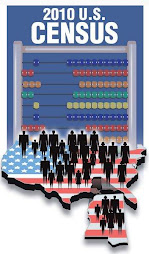
Wicker Urges Census Participation
A Strong Response will Benefit Mississippi Communities
The 2010 U.S. Census is well underway, and officials are beginning to tally the census forms that many citizens mailed back by the April 16 deadline. I am troubled by the rate of participation being reported out of Mississippi. A Census Bureau survey indicated that only 62 percent of Mississippi households statewide have responded so far, compared to a 67 percent rate by the deadline in 2000.
Some people have speculated that a healthy and growing skepticism about big government may result in a lower participation rate in this year’s census. However, I would strongly suggest that ignoring the census is not a productive way to make a statement against the size and intrusiveness of today’s federal government. In fact, such leading conservatives as Rush Limbaugh and Karl Rove are speaking out to ease Americans’ concerns about the purpose of the census. They are urging all Americans to participate in the counting process, which has been an important part of our democracy since the founding fathers wrote it into the Constitution.
I agree with these conservative leaders. Beginning May 1, census workers will be dispatched to households that did not mail back their forms in order to gather this important information in person. Those who have not responded by mail will still have the opportunity participate. It is my hope that every single Mississippian will stand up and be counted.
Fair Representation and Funding
The U.S. Census is an important part of American history, and it serves a key purpose. James Madison wanted to ensure that all Americans would be fairly and proportionately represented in Congress. Thus, the Constitution requires a count of all U.S. citizens to be conducted once every 10 years. The results of the census determine what portion of federal resources will be allocated to each state and how many representatives states will have in Congress. Secretary of State Thomas Jefferson oversaw the first census in 1790, and a count of the U.S. population has taken place every 10 years since.
Today, we have much to gain by taking an accurate count of our state’s residents. Many important federal funding decisions are made based on state population, including support for hospitals, schools, job training centers, transportation and public works projects, emergency services, and more. The higher our state’s response to the U.S. Census, the more federal resources are available to meet the needs of local communities.
When the 2000 Census was conducted, setting Mississippi’s Congressional representation and federal funding eligibility for the decade, no one could have anticipated the unprecedented challenge of Hurricane Katrina, which would become the most devastating and costly natural disaster in U.S. history. Many of the first responders, including area non-profit organizations and local fire, emergency medical, and law enforcement agencies, rely on funding support that is often determined by population needs. Census data also impacts funding for roads and bridges. This funding is critically important as our state continues to rebuild transportation infrastructure damaged or destroyed by Katrina. An accurate population count would help our state and local entities be better prepared to respond to future challenges.
Citizen Data is Confidential
It is important to stress the confidentiality of the information collected. Citizens are never asked for their social security numbers or for information about income. Once the data is collected, it is kept private by the U.S. Census Bureau. By law, census workers and officials are prohibited from disclosing identifiable information about participants. The information will not even be shared with other federal agencies, such as the Internal Revenue Service, the Federal Bureau of Investigation, or the Department of Justice, to name a few. Americans’ answers may never be used against them by the government or in any court. Ultimately, the information is collected with the sole purpose of producing population statistics.
Nationwide, 68 percent of households mailed back their census forms by the April 16, 2010, deadline. In an effort to collect data from the remaining 33 percent, 600,000 census workers will visit those who have not yet responded and ask the 10 simple questions in person. I hope all Mississippi households that are visited will take a few moments to answer the census workers’ questions. We all should remember that the census is confidential, it is Constitutional and time-honored, and a good result can benefit Mississippi for the next 10 years.
Showing posts with label Roger Wicker. Show all posts
Showing posts with label Roger Wicker. Show all posts
Friday, April 16, 2010


Thursday, April 15, 2010
Commercial Appeal discusses Census 2010
With a Friday deadline to return federal census forms fast approaching, local and state officials are urging Mississippians to fill out their forms and mail them if they haven't done so already.
Friday is the last day to return census forms that were mailed to residents across the U.S. in March.
After the deadline, census workers will be sent to addresses from which forms haven't been received to collect the data in person.
Besides the cost of having to send workers -- it's estimated that taxpayers pay $57 per household for census workers to make in-person visits -- Sens. Thad Cochran and Roger Wicker, both R-Miss., said a thorough count ensures the state gets proper representation and its fair share of funding.
"The entire state of Mississippi benefits with each census forum returned, and the reverse can also be true," Cochran and Wicker said in a joint statement.
According to the most current figures, 61 percent of Mississippians have returned forms, compared to a national average return rate of 67 percent.
A Census Bureau survey showed that as of Tuesday, 18 of the state's 82 counties had return rates of at least 65 percent.
DeSoto County is keeping pace with the national rate at 67 percent.
Tuesday, April 13, 2010
Cochran, Wicker urge Mississippians to be counted
Sens. Cochran and Wicker Urge Mississippians to Send in Census Forms by April 16 Deadline
Census Data Sets Federal Funding, Congressional Representation for Miss.
WASHINGTON, DC— With the April 16 deadline looming, U.S. Senators Thad Cochran and Roger Wicker (R-Miss.) today urged Mississippians to complete and send in their 2010 Census forms. U.S. census data, which is collected every 10 years, is used to determine the number of Representatives each state may send to Congress and how much federal funding will be allocated for hospitals, schools, emergency services, transportation infrastructure, and other services.
“The entire state of Mississippi benefits with each census form returned, and the reverse can also be true. I encourage Mississippians to complete and return a census form so that our state can be properly represented over the next decade,” said Cochran. “I commend the counties that, according to the Census Bureau, have return rates that meet or exceed 65 percent. As a state, we can do better, and I hope our citizens will act by Friday’s deadline.”
“Today, with only 61 percent of Mississippians participating in the census so far, our state is not where it needs to be. I hope every household in Mississippi will take a few moments to complete the census form and mail it in by April 16. This will help ensure that Mississippi is proportionately represented in Congress and that our state receives its fair share of federal resources to meet the specific needs of local communities,” said Wicker.
Earlier this year, every U.S. household received in the mail a census questionnaire and a pre-addressed, postage-paid return envelope. The questions on the form include the number of residents in the household as well as their ages, genders, and ethnicities. All information is kept confidential. As of April 13, a Census Bureau survey indicated that only 61 percent of Mississippi households statewide have completed and sent in their forms. Eighteen of the state’s counties have return rates of at least 65 percent—Alcorn, Chickasaw, Clay, DeSoto, Itawamba, Lincoln, Lowndes, Monroe, Pontotoc, Prentiss, Rankin, Tate, Tippah, Tishomingo, Union, Walthall, Webster and Winston.
The Census Bureau will accept all census forms mailed on or before April 16, 2010. After the mail return deadline, the Census Bureau will dispatch census workers to households that have not responded in order to collect the data.
It costs the government .42 cents to receive a questionnaire back through the mail, but it costs taxpayers $57 per household for census workers to collect the same information in person. The Census Bureau projects that if every household mailed back its questionnaire, it would drastically reduce the cost of the census and save taxpayers $1.5 billion.
The U.S. Constitution calls for a census of American citizens to be carried out every 10 years. The first census was conducted in 1790, and a count of the U.S. population has taken place every 10 years since.
Constituents with additional questions may visit the U.S. Census 2010 website for more information: http://2010.census.gov/2010census/index.php
Friday, October 30, 2009
Wicker: MS could lose a seat in Census 2010 reapportionment process
From WTOK:
Could Mississippi lose another seat in Congress? Mississippi Sen. Roger Wicker said it's a possibility.
Speaking to reporters in the state Thursday, Wicker said statistics from the 2000 Census showed states like California counted illegal immigrants as citizens. He said it could happen again, with even more illegal immigration during the past decade.
"When it comes to reapportionment of our Congressional seats, when it comes to deciding how the electoral college is going to be allocated, how many seats Mississippi will have in the House of Representatives, how many votes we will have in the presidential election every four years, we need to count citizens and citizens only," said Wicker.
Mississippi, Indiana, and Michigan lost a seat in Congress based on the 2000 Census.
Wicker is supporting a Senate amendment to add the question, "Are you a U.S. citizen?" to census forms that will go out in March 2010.
Wicker's press statement:
For Release Week of November 2, 2009
Contact: Jordan Stoick - (202) 224-6253
Report From Congress
By Senator Roger F. Wicker
WICKER: LACK OF CITIZENSHIP QUESTION ON CENSUS COULD HURT MISSISSIPPI
Senator Says Illegal Immigrants Elsewhere Could Cost State Funding, Congressional Representation
Many Mississippians are aware of next year's census, though few realize its results could have a negative impact on our state. Because of high concentrations of illegal immigrants in other states, Mississippi is at risk of losing a lot, including federal funding and one of our four seats in the U.S. House of Representatives.
This would not be the first time our state has been impacted negatively by the number of non-citizens living elsewhere in the country. Following the 2000 census, Mississippi went from five seats to four in the House of Representatives. The Center for Immigration Studies stated in a 2003 report that this loss was due to the counting of illegal immigrants elsewhere in the country during the last census.
Our Constitution requires a census be taken every 10 years to decide how the 435 seats of the House will be divided. The seats are split among all states in proportion to their population, meaning that if non-citizens are counted toward apportionment, a state with a high number of illegal immigrants stands to receive greater congressional representation than a state with fewer non-citizens.
States with a high number of non-citizens would also be given greater influence in presidential elections, as the Electoral College system is based on the size of a state's congressional delegation. The numbers collected from the census are also used to decide the annual distribution of approximately $400 billion in federal funding, which means critical funding to states and localities goes disproportionately to those areas with more non-citizen residents.
CITIZENSHIP QUESTION NEEDED
In order to get an accurate snapshot of our nation's population and demographic makeup, I believe next year's census should count everyone. However, I do not believe that illegal immigrants and other non-citizens should be considered when deciding how congressional seats and federal funding are divided amongst the states. The only way we can make this critical distinction is if the census asks a question about citizenship. Unfortunately, in its current form, next year's 10-question census does not do so.
I support an effort currently underway in Congress to add the question of citizenship to next year's census. The push, being led by Senators David Vitter of Louisiana and Robert Bennett of Utah, represents a common sense approach that would provide the information needed to restore confidence in how our census data is used.
Recent data from the U.S. Census Bureau shows there are 298 million people currently living in the U.S., a number that includes 21 million non-citizens. According to Numbers USA, including illegal immigrants and non-citizens in the reapportionment process would have a huge impact in how House seats are divided. The group states: "Counting only U.S. citizens would result in [House] districts with approximately 635,000 people, whereby counting all individuals regardless of citizenship would create districts with more than 685,000. Therefore, the state of California that has 5.7 million non-citizen residents could gain five or more seats in the House."
Many estimates show that states with high numbers of illegal immigrants - like California, Nevada, Texas, and New York - stand to gain after next year's census. These potential gains would likely come at the expense of a handful of other states without high populations of illegals. In addition to Mississippi, Louisiana also falls in this category, meaning two states still working to recover from the worst natural disaster to hit our country are vulnerable to losing critical federal funding and representation in Congress.
COMMON SENSE REFORM
Opponents of the plan to add a citizenship question to next year's census claim that it would be too costly to reprint forms and that there is not enough time to do so before the count takes place next spring. I disagree and believe it is too important to wait another ten years before addressing this issue. As James Gill, a columnist with the New Orleans Times Picayune, said, "Only a government bureaucrat could claim that adding one simple question could cause such havoc and take so long." He added, "It shouldn't take months to figure out how to ask whether respondents are citizens of this country."
It is unfair for Mississippi or any other state to be forced to cede influence and federal representation to other states that have high non-citizen populations, particularly those that harbor illegal immigrants. We experienced this after the 2000 census, and we should not allow it to happen again.
Monday, August 24, 2009
Wicker "completely opposed" to counting illegal aliens in 2010 Census
WTOK reports on Sen. Wicker's stance on counting illegal aliens in Census 2010:
Every decade, the U.S. Census is mailed to households nationwide. It helps the government make important decisions. But this time around, it's causing some controversy.
The roads you drive on are just one of the services that census dollars can fund. And as the clock counts down to census day, it ought to be an accurate count.
There's controversy brewing over who the census counts.
"I am completely opposed to counting illegal immigrants, illegal aliens in our census," said Sen. Roger Wicker.
Wicker said he fears that including illegal immigrants in a population count will skew political representation and federal money that states like Mississippi receive.
"If they broke the law to get here, they should not be counted," Wicker said.
Only the long form version of the census asks about citizenship. But only the short form version will be sent out in 2010.
The Census Bureau says it's required by law to count all everyone living in the United States.
"We need to know who people are, where they are living," said Bill Chandler of the Mississippi Immigrants Rights Alliance thinks it's important to count undocumented immigrants.
"They are working here. They pay payroll taxes. They pay sales taxes," said Chandler. "They do all the same things we do to contribute to the public funds."
You can expect to see a census form in your mailbox in February or March 2010. Sen. Wicker said he hopes Congress addresses the issue.
Tuesday, July 14, 2009
MS Senators: How they voted
Today Robert Groves was confirmed as Census Director (he was Obama's pick to head this politically appointed post).
Wicker votes nay; Cochran votes yea.
Subscribe to:
Posts (Atom)