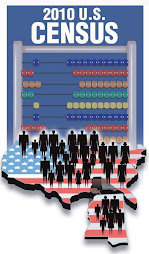
Bobby Harrison of the Daily Journal writes about what the future holds in terms of redistricting in MS. Will there be a fight? We'll see in 2011...
JACKSON - Most likely, in early 2011 the Mississippi Legislature will get the state's population data from the U.S. Census Bureau. It will outline what areas of the state have increased population and what areas have lost population.
Then the Legislature must act quickly to redraw the state's 122 House and 52 Senate districts in time to get U.S. Justice Department approval of a redistricting plan before June 1, the qualifying deadline for legislative candidates.
In other words, the Legislature will be acting on a tight time frame to get the districts redrawn in time for the 2011 elections, which will consist of August party primaries and the November general election.
Every other decade, Mississippi faces this problem - the legislative elections occur a year after the Census, meaning the Legislature has little time to reach agreement and put in place new legislative districts.
In 1991, the Legislature did not make it. Racial politics, a speaker's race and other factors prevented the Legislature from reaching agreement. The issue ended up in federal court and with legislators running in 1991 under the old districts and again in 1992 under the new districts.
Legislators will try to avoid the back-to-back elections this time around, but there are no guarantees.
Federal law and court rulings require legislative districts - on the local, state and national levels - to be close to equal in population. Gone are the days when a state House member represented tens of thousands of people in a metro area while a colleague might represented only a few thousand in a rural area.
Under that scenario, the rural population was receiving more representation than urban citizens.
Federal law adheres to the principle of one man, one vote. And in reality, it is one of the most important concepts of our representative democracy.
It is important enough that in 1991, a federal judicial panel said the Legislature could not serve even one four-year term under the old, outdated, unequal district lines. The Legislature served one year under the old lines and had to run again next year.
For a politician, having to run back-to-back years for the same seat has to be a type of electoral purgatory.
If legislators want to avoid that in 2011, they will have to act quickly. After the Legislature adopts a redistricting plan, it also must gain approval of the Justice Department. That can take several weeks.
No doubt, in 2011 there will be a speaker's race just as there was in 1991. In 1991, incumbent Speaker Tim Ford of Baldwyn was being challenged by Ed Perry of Oxford.
After the 2007 campaign, Billy McCoy, D-Rienzi, re-captured the speaker's post by a slim 63-61 margin. Whether McCoy runs or not in 2011, there will be a speaker's race under way when the redistricting process occurs.
That speaker's race could impact the redrawing of the districts lines just as it did in 1991.
The difference is that in 1991 the disagreement broke down, generally speaking, along geographic and urban vs. rural lines, even within the Black Caucus. This time, the divide will most likely will break down along party lines.
Over in the Senate, in 2007 then Lt. Gov.-elect Phil Bryant met with Senate Democrats, who hold a slim majority, and promised not to try to use redistricting as a tool to increase Republican numbers in the Senate. In turn, Democrats promised not to wage what could have been a messy rules fight to try to strip some of the lieutenant governor's Senate powers.
In the past, the leaders of the respective chambers have drawn and gotten approved the redistricting plan for their chamber and it was rubber-stamped by the other chamber. The governor has no official responsibility in the process.
But with a rise in partisan politics in the state, will the Senate try to block the House plan or vice versa? Will Gov. Haley Barbour use his considerable influence over the Senate to try to block the House plan?
If that happens, look for the issue to end up in court again with legislators running in 2011 and 2012.
Tuesday, September 1, 2009


Monday, August 31, 2009
Katrina hits Gulf Coast Census
Four years after Katrina and population counts are still a worry for coastal leaders. Read the Clarion Ledger's take on the issue.
Katrina hits Gulf Coast census
Population loss puts dollars, political clout in jeopardy
Gulf Coast cities hit hard by Hurricane Katrina four years ago stand to lose future federal funding, and possibly some political representation, as mostly lower-income residents stay away from the area, analysts say.
Harrison and Hancock counties in particular could lose federal grants for everything from education to health care to housing if the 2010 census count shows numbers significantly below pre-Katrina levels, said Judith Phillips, a research analyst for the Stennis Institute of Government at Mississippi State University.
Census data taken since the Aug. 29, 2005, storm shows people are returning to the Coast. But population levels are not what they were before the hurricane leveled the area.
Hancock County has lost 6,700 people, Phillips said. Harrison County's population has declined by 17,000, census figures show.
"People who have not returned are low income," she said. "That is going to end up negatively impacting the formula that affects (Housing and Urban Development) and housing money."
Local officials are looking for ways to make sure as many residents as possible are counted, a task that may be challenging because lower-income residents are less likely to respond to surveys.
In Gulfport, officials are turning to the social networking site Facebook to help coordinate census efforts. Meetings are planned in Biloxi and Waveland to decide the best strategy for an accurate count.
Waveland Mayor Tommy Longo said his city's door-to-door survey shows the area has changed significantly in population and demographics since Katrina.
"It's very important to us that we get a good, accurate count," he said last week.
Enrollment at Biloxi public schools is still 20 percent off its pre-Katrina level of 6,100, officials said.
Civil rights groups are urging census officials not to overlook displaced hurricane victims when they conduct their 2010 count on the Coast.
The groups, including national organizations and some from the Gulf Coast, want Congress to hold a field hearing on the Coast to examine hurdles to an accurate count.
They also want census officials to appoint someone to coordinate the count and to conduct a special census in 2011 or 2012.
An undercount would be "one more devastating blow" to the Gulf Coast, according to Wade Henderson, president of the Leadership Conference on Civil Rights.
The Census Bureau conducts a major count every 10 years of people living in the United States, in addition to other, smaller counts. Census data is used for everything from distributing nearly $400 billion in federal funding to determining the number of congressional seats allocated to each state.
"The stakes for this census are extremely high, especially along the Gulf Coast," Henderson said.
Bay St. Louis business owner Dwight Isaacs said he fears of another monster storm and the high cost of insurance keeps people from returning to the Coast.
"They're scared, and that's understandable," he said, adding his post-Katrina mortgage payment has doubled because of insurance costs.
"It's just really hard to live and work here. Everything's so expensive," said Isaacs, who is closing his gift shop in the city's Old Town.
Businesses now face insurance costs of "anywhere from $10,000 to $25,000 a year," he said.
Phillips said the Coast's rising unemployment rate could offset the decline in population and result in a less severe funding loss.
But lower population levels also could cause the Coast to lose "a seat or two" in the state Legislature, said Marty Wiseman, director of the Stennis Institute.
He suggested the area count as many residents as possible.
But Sen. Roger Wicker, a Republican from Tupelo, said he opposes counting illegal immigrants.
"If someone breaks the law and has entered our country illegally, they should not be counted," he said.
But Wiseman said, "It would be wise, if the Coast wants to keep its legislative seats, to count everybody. (Hispanic residents) may be the very thing that saves the Coast."
Katrina hits Gulf Coast census
Population loss puts dollars, political clout in jeopardy
Gulf Coast cities hit hard by Hurricane Katrina four years ago stand to lose future federal funding, and possibly some political representation, as mostly lower-income residents stay away from the area, analysts say.
Harrison and Hancock counties in particular could lose federal grants for everything from education to health care to housing if the 2010 census count shows numbers significantly below pre-Katrina levels, said Judith Phillips, a research analyst for the Stennis Institute of Government at Mississippi State University.
Census data taken since the Aug. 29, 2005, storm shows people are returning to the Coast. But population levels are not what they were before the hurricane leveled the area.
Hancock County has lost 6,700 people, Phillips said. Harrison County's population has declined by 17,000, census figures show.
"People who have not returned are low income," she said. "That is going to end up negatively impacting the formula that affects (Housing and Urban Development) and housing money."
Local officials are looking for ways to make sure as many residents as possible are counted, a task that may be challenging because lower-income residents are less likely to respond to surveys.
In Gulfport, officials are turning to the social networking site Facebook to help coordinate census efforts. Meetings are planned in Biloxi and Waveland to decide the best strategy for an accurate count.
Waveland Mayor Tommy Longo said his city's door-to-door survey shows the area has changed significantly in population and demographics since Katrina.
"It's very important to us that we get a good, accurate count," he said last week.
Enrollment at Biloxi public schools is still 20 percent off its pre-Katrina level of 6,100, officials said.
Civil rights groups are urging census officials not to overlook displaced hurricane victims when they conduct their 2010 count on the Coast.
The groups, including national organizations and some from the Gulf Coast, want Congress to hold a field hearing on the Coast to examine hurdles to an accurate count.
They also want census officials to appoint someone to coordinate the count and to conduct a special census in 2011 or 2012.
An undercount would be "one more devastating blow" to the Gulf Coast, according to Wade Henderson, president of the Leadership Conference on Civil Rights.
The Census Bureau conducts a major count every 10 years of people living in the United States, in addition to other, smaller counts. Census data is used for everything from distributing nearly $400 billion in federal funding to determining the number of congressional seats allocated to each state.
"The stakes for this census are extremely high, especially along the Gulf Coast," Henderson said.
Bay St. Louis business owner Dwight Isaacs said he fears of another monster storm and the high cost of insurance keeps people from returning to the Coast.
"They're scared, and that's understandable," he said, adding his post-Katrina mortgage payment has doubled because of insurance costs.
"It's just really hard to live and work here. Everything's so expensive," said Isaacs, who is closing his gift shop in the city's Old Town.
Businesses now face insurance costs of "anywhere from $10,000 to $25,000 a year," he said.
Phillips said the Coast's rising unemployment rate could offset the decline in population and result in a less severe funding loss.
But lower population levels also could cause the Coast to lose "a seat or two" in the state Legislature, said Marty Wiseman, director of the Stennis Institute.
He suggested the area count as many residents as possible.
But Sen. Roger Wicker, a Republican from Tupelo, said he opposes counting illegal immigrants.
"If someone breaks the law and has entered our country illegally, they should not be counted," he said.
But Wiseman said, "It would be wise, if the Coast wants to keep its legislative seats, to count everybody. (Hispanic residents) may be the very thing that saves the Coast."
Tuesday, August 25, 2009
Group seeks special census for Gulf Coast region
NEW ORLEANS (AP) - A national civil rights coalition wants Congress to authorize a special census for certain Gulf Coast communities that will be recovering from Hurricane Katrina when the traditional Census is taken next year.
The Leadership Conference on Civil Rights notes that people are still returning to the region and that federal recovery aid is still flowing four years after Katrina.
The group in a report Monday urges Congress to evaluate the status of Gulf Coast recovery after the 2010 Census to see which communities should be included in a special census in 2012 or 2013.
The group says a special census would allow for any big population shifts to be reflected in the allocation of funds for certain state and federal programs that use Census data.
The Leadership Conference on Civil Rights notes that people are still returning to the region and that federal recovery aid is still flowing four years after Katrina.
The group in a report Monday urges Congress to evaluate the status of Gulf Coast recovery after the 2010 Census to see which communities should be included in a special census in 2012 or 2013.
The group says a special census would allow for any big population shifts to be reflected in the allocation of funds for certain state and federal programs that use Census data.
Monday, August 24, 2009
Wicker "completely opposed" to counting illegal aliens in 2010 Census
WTOK reports on Sen. Wicker's stance on counting illegal aliens in Census 2010:
Every decade, the U.S. Census is mailed to households nationwide. It helps the government make important decisions. But this time around, it's causing some controversy.
The roads you drive on are just one of the services that census dollars can fund. And as the clock counts down to census day, it ought to be an accurate count.
There's controversy brewing over who the census counts.
"I am completely opposed to counting illegal immigrants, illegal aliens in our census," said Sen. Roger Wicker.
Wicker said he fears that including illegal immigrants in a population count will skew political representation and federal money that states like Mississippi receive.
"If they broke the law to get here, they should not be counted," Wicker said.
Only the long form version of the census asks about citizenship. But only the short form version will be sent out in 2010.
The Census Bureau says it's required by law to count all everyone living in the United States.
"We need to know who people are, where they are living," said Bill Chandler of the Mississippi Immigrants Rights Alliance thinks it's important to count undocumented immigrants.
"They are working here. They pay payroll taxes. They pay sales taxes," said Chandler. "They do all the same things we do to contribute to the public funds."
You can expect to see a census form in your mailbox in February or March 2010. Sen. Wicker said he hopes Congress addresses the issue.
Every decade, the U.S. Census is mailed to households nationwide. It helps the government make important decisions. But this time around, it's causing some controversy.
The roads you drive on are just one of the services that census dollars can fund. And as the clock counts down to census day, it ought to be an accurate count.
There's controversy brewing over who the census counts.
"I am completely opposed to counting illegal immigrants, illegal aliens in our census," said Sen. Roger Wicker.
Wicker said he fears that including illegal immigrants in a population count will skew political representation and federal money that states like Mississippi receive.
"If they broke the law to get here, they should not be counted," Wicker said.
Only the long form version of the census asks about citizenship. But only the short form version will be sent out in 2010.
The Census Bureau says it's required by law to count all everyone living in the United States.
"We need to know who people are, where they are living," said Bill Chandler of the Mississippi Immigrants Rights Alliance thinks it's important to count undocumented immigrants.
"They are working here. They pay payroll taxes. They pay sales taxes," said Chandler. "They do all the same things we do to contribute to the public funds."
You can expect to see a census form in your mailbox in February or March 2010. Sen. Wicker said he hopes Congress addresses the issue.
Wednesday, August 19, 2009
Census Bureau to hand deliver to parts of regions affected by Katrina (MS, LA)
From the Associated Press:
NEW ORLEANS — Census forms will be hand-delivered in the city of New Orleans and surrounding areas affected by the 2005 hurricanes Katrina and Rita to get the most accurate count possible following concerns that the region could lose federal representation and funding.
The measures announced by U.S. Census Bureau Director Robert M. Groves on Tuesday did not go as far as those sought by Mayor Ray Nagin and some advocacy groups to locally count potentially thousands of former residents scattered across the country who are trying to come back.
By at least one estimate, 75 percent of New Orleans' pre-Katrina population has returned in the nearly four years since the Aug. 29, 2005, storm and levee breaches. In some neighborhoods, there remain huge swaths of empty homes.
Groves said he shared Nagin's concerns, but "the proposal to count people where they want to be is something that would really be a massive change."
Census rules dictate people be counted "in their abodes," as of Census Day, he said, and Congress has not changed the law to reflect situations like refugees of Katrina and other disasters, missionaries spending time overseas or noncitizens being included in the count.
"So we have to follow the law," Groves said. "In the 2010 Census, we'll count people where they usually live."
Census workers in the region are expected to hand-deliver an estimated 300,000 questionnaires to homes in 11 south Louisiana parishes affected by hurricanes Katrina and Rita in 2005.
Additional hand deliveries are expected in parts of Mississippi's Hancock, Harrison and Jackson counties, also affected by the 2005 storms, and parts of Galveston Island, Texas, which was hit by Hurricane Ike last summer, said Jeff Behler, deputy regional director of the census' Dallas office.
NEW ORLEANS — Census forms will be hand-delivered in the city of New Orleans and surrounding areas affected by the 2005 hurricanes Katrina and Rita to get the most accurate count possible following concerns that the region could lose federal representation and funding.
The measures announced by U.S. Census Bureau Director Robert M. Groves on Tuesday did not go as far as those sought by Mayor Ray Nagin and some advocacy groups to locally count potentially thousands of former residents scattered across the country who are trying to come back.
By at least one estimate, 75 percent of New Orleans' pre-Katrina population has returned in the nearly four years since the Aug. 29, 2005, storm and levee breaches. In some neighborhoods, there remain huge swaths of empty homes.
Groves said he shared Nagin's concerns, but "the proposal to count people where they want to be is something that would really be a massive change."
Census rules dictate people be counted "in their abodes," as of Census Day, he said, and Congress has not changed the law to reflect situations like refugees of Katrina and other disasters, missionaries spending time overseas or noncitizens being included in the count.
"So we have to follow the law," Groves said. "In the 2010 Census, we'll count people where they usually live."
Census workers in the region are expected to hand-deliver an estimated 300,000 questionnaires to homes in 11 south Louisiana parishes affected by hurricanes Katrina and Rita in 2005.
Additional hand deliveries are expected in parts of Mississippi's Hancock, Harrison and Jackson counties, also affected by the 2005 storms, and parts of Galveston Island, Texas, which was hit by Hurricane Ike last summer, said Jeff Behler, deputy regional director of the census' Dallas office.
Monday, August 17, 2009

Wednesday, August 5, 2009
Bolivar County gets on board with Census promotion
Bolivar County prepares for 2010 Census
Bolivar County has partnered with the Census Bureau in the quest to spread awareness about the census in 2010.
“One of the government’s representatives Dorothy Walls came to me and expressed her concern about getting the word out about the 2010 census,” said Will Hooker, Bolivar County administrator. “The government is trying to raise awareness throughout the state. I believe Bolivar County is the first county in this area to get on the band wagon.”
The census is a count of everyone living in the United States every 10 years and is mandated by the U.S. Constitution.
The public’s participation in the census is required by law and takes less than 10 minutes to complete. Federal law protects the personal information shared during the census.
“We have formed a very diverse group that will serve on our counting committee,” said Hooker. “We have about 20 members on the committee. There’re individuals from west Bolivar, the northern part of the county and all over the county.
“This is really important and we want to educate the citizens in our area about the importance of the 2010 census,” he said.
Bolivar County has partnered with the Census Bureau in the quest to spread awareness about the census in 2010.
“One of the government’s representatives Dorothy Walls came to me and expressed her concern about getting the word out about the 2010 census,” said Will Hooker, Bolivar County administrator. “The government is trying to raise awareness throughout the state. I believe Bolivar County is the first county in this area to get on the band wagon.”
The census is a count of everyone living in the United States every 10 years and is mandated by the U.S. Constitution.
The public’s participation in the census is required by law and takes less than 10 minutes to complete. Federal law protects the personal information shared during the census.
“We have formed a very diverse group that will serve on our counting committee,” said Hooker. “We have about 20 members on the committee. There’re individuals from west Bolivar, the northern part of the county and all over the county.
“This is really important and we want to educate the citizens in our area about the importance of the 2010 census,” he said.
Subscribe to:
Comments (Atom)